When deploying websites or applications in Vietnam, choosing a suitable Vietnamese Internet server host and comparing service levels is the top priority. This article provides professional and practical advice on selection from aspects such as market environment, hosting types, SLAs, data centers, and security, to help balance website speed, stability, and compliance.
Understanding the Vietnamese market and online environment
Before choosing a Vietnamese Internet server host, it is necessary to evaluate the local network backbone, operator interconnections, and international bandwidth. Delays, network congestion, and the distribution of local users in Vietnam directly affect access speeds and user experience. Therefore, it is important to prioritize hosting providers with a robust local backbone and multiple connection options.
Comparison of Hosting Types and Service Level Agreements (SLAs)
Hosting types usually include shared, VPS, dedicated servers, and cloud hosting, with different types corresponding to different service levels. When making a choice, it is necessary to consider the scale of business and budget, as well as define expected traffic, peak load, and availability requirements, so as to make a reasonable decision when comparing Internet server hosting providers and service levels in Vietnam.
Use cases for shared, VPS, and dedicated servers
Shared hosting is suitable for small websites; it’s inexpensive but offers weak resource isolation ; VPS offers good scalability for applications of moderate scale ; Dedicated servers or hosted clouds are suitable for projects with high concurrency or strict compliance requirements. Choose a solution that allows for horizontal or vertical scaling based on the speed of business growth.
High Availability and SLA Key Metrics
When comparing Vietnamese Internet server hosting providers and service levels, focus on the availability in the SLA (such as 99.9%), response time, failure recovery time, and compensation mechanisms. It is also necessary to confirm the specific commitments regarding monitoring, alerts, and maintenance windows to reduce the risk of business disruption.
Data Center Location and Connectivity Assessment
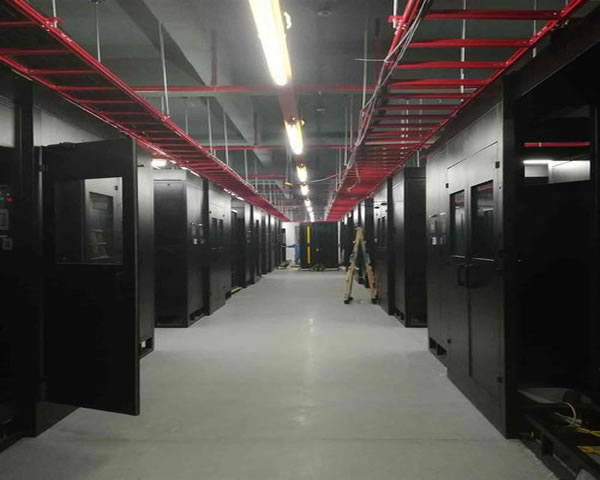
The location of the data center determines access latency and network paths; select data centers that are close to the target user group. Evaluate the data center’s multi-link access, backbone direct connections, CDN node support, and cross-border interconnection capabilities to ensure good network performance both locally in Vietnam and for international users.
Security and compliance requirements
Check whether the host provider offers security features such as DDoS protection, intrusion detection, backups, and encrypted storage, and confirm that it complies with Vietnam’s local data protection and registration requirements. For businesses dealing with sensitive data, it is preferable to choose service providers with compliance experience and a clear division of security responsibilities.
Customer Support, Operations & Scalability
Customer support response speed and localized services are very important; prioritize hosting providers that offer 24/7 support, communication in Vietnamese, and professional operation and maintenance services. At the same time, pay attention to the scaling process, automated deployment, API interfaces, and billing models to ensure smooth expansion as the business grows in the future.
Selection Process and Key Decision Points
It is recommended to first define business requirements, performance benchmarks, and budgets. Then, evaluate Vietnamese Internet server hosting providers and their service levels based on criteria such as latency, availability, backup, and security. Finally, verify their actual performance through trials or small-scale migrations to reduce the risk of making a wrong choice.
Summary and Recommendations
Overall, when choosing a Vietnamese Internet server hosting provider and evaluating service levels, business needs should be the core focus, with comprehensive consideration given to network connectivity, SLAs, data center location, security, and local support. By clarifying requirements, conducting phased testing, and negotiating contract terms, a balance can be achieved between performance, cost, and compliance to ensure long-term stable operation.
- Latest articles
- Practical Tips For Optimizing The Performance Of VPS Dedicated Line Singapore In A Multinational Office Scenario
- Evaluate The Access Performance Of Domestic Cn2 Taiwan From The Perspective Of SEO And GEO Optimization And Propose Improvements
- A Must-read For Corporate Decision-makers: How Much Does A Korean Cloud Server Cost? Suggestions On Weighing Against Service Quality Assurance
- Hong Kong Cn2 Lightweight Deployment Process Guide From Purchase To Online
- Enterprise Buying Guide Why Renting A German Server Dedicated Line Is More Reliable Than An Ordinary Line
- Hong Kong Cloud Server CDN Deployment Process And Cost Optimization Practical Guide
- Why Hong Kong Vps Has Natural Advantages In Network Connectivity And Bandwidth Stability
- Achieve Independent Traffic Isolation For Different Business Lines Through Multiple IP Addresses Of US High-defense Servers
- Reliability Evaluation Report Of Vietnam Cn2 Service Provider In Enterprise-level Application Deployment
- A Must-read For Enterprise Users: Which Cloud Servers Are Good In Malaysia And Compared With Service Providers?
- Popular tags
-

Cross-region Matching And Player Experience Optimization Case Sharing On Vietnam Servers
share player experience optimization practices for cross-region matching and vietnam servers, covering latency and load balancing, matching algorithm tuning, monitoring and operation suggestions, to help improve the gaming experience of players in vietnam and surrounding areas. -

Why Vietnam’s Native Ip Is An Ideal Choice For Cross-border E-commerce
discuss the advantages of vietnam’s native ip in cross-border e-commerce, analyze why it is suitable for online marketing, and how to utilize the potential of the vietnamese market. -

Beginner’s Quick Guide To Using Native Vietnamese Proxy IPs: Tutorial And Common Mistakes To Avoid
A tutorial for beginners on using native Vietnamese proxy IPs, along with a guide to avoiding common mistakes. It covers concepts, parameter selection, configuration steps, common scenarios, common errors, and solutions to help you get started quickly, safely, and efficiently.